
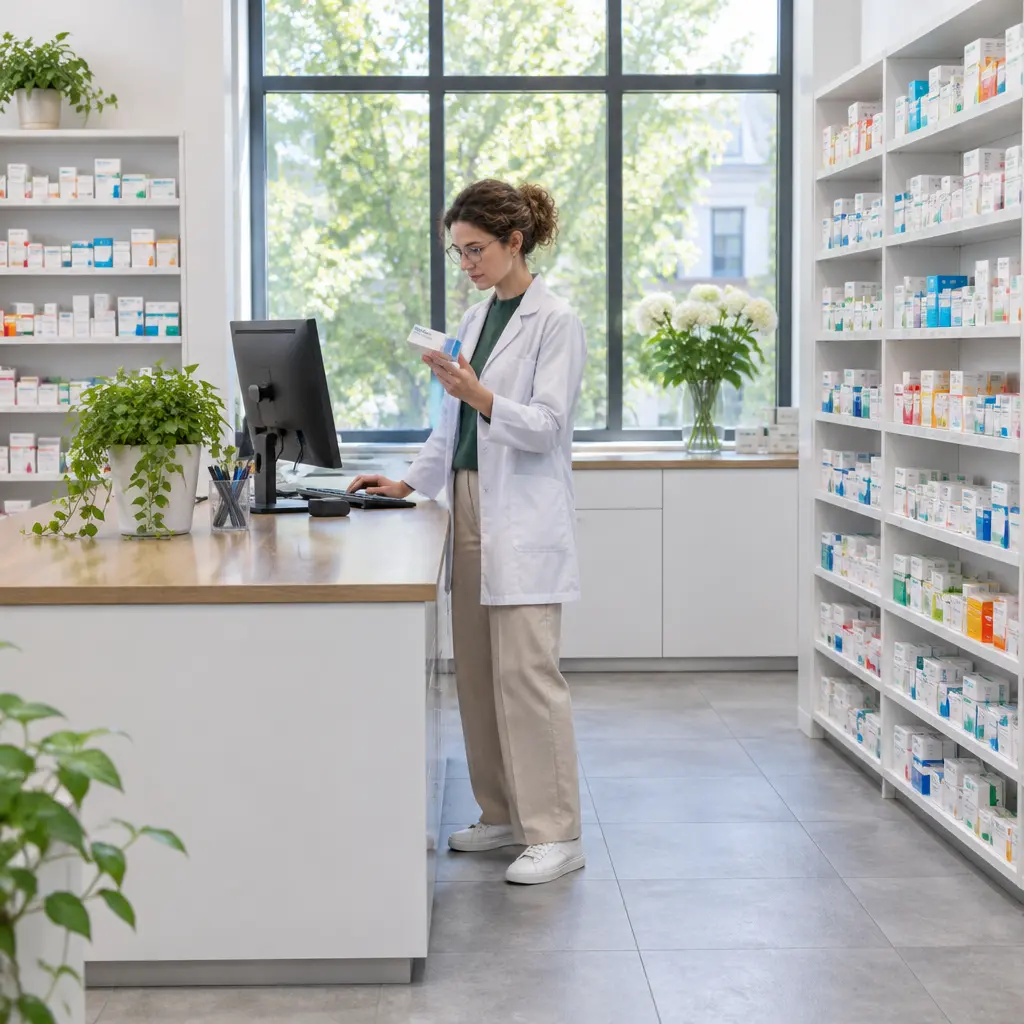
An online pharmacy is a website or digital service that sells or dispenses medicines, often after receiving a prescription. A safer choice is one that is licensed in the jurisdiction where it operates, requires a valid prescription for prescription-only medicines, identifies its pharmacist and physical business address, and uses appropriate privacy and payment protections. These checks matter: the U.S. National Association of Boards of Pharmacy (NABP) has reported that the vast majority of online pharmacy websites it reviewed did not comply with applicable pharmacy laws or practice standards. Before ordering, verify the pharmacy with an official regulator, scrutinize its prescribing practices and product claims, and know what to do if a medicine or order seems suspicious.
What makes an online pharmacy safe: licensing and verification
Online pharmacy safety means having reasonable assurance that a medicine is genuine, properly stored and dispensed, and supplied by a legally authorized business with appropriate professional oversight. The U.S. Food and Drug Administration (FDA) advises consumers to use pharmacies that require a prescription, are licensed by a state board of pharmacy, and provide access to a licensed pharmacist. Licensing is a foundational check, but it should be considered alongside prescription practices, medicine quality, and security.
Check the pharmacy’s license and operating location
A licensed pharmacy is authorized by a relevant regulator to dispense medicines under local law. In the United States, check the pharmacy’s license with the state board of pharmacy for the state where it operates; if it serves customers in other states, confirm any required nonresident licenses too. The NABP’s Safe Site Search tool can help identify pharmacies it has reviewed, while state regulators remain the authoritative source for licensing status. In other countries, consult the national medicines regulator or official pharmacy register. A website’s own claim that it is “licensed” is not proof until it matches the regulator’s records.
Look for a real pharmacist and contact details
A legitimate pharmacy should identify the business and make it possible to contact a pharmacist about a medicine, side effects, or interactions. Look for a verifiable business name, physical address, and working phone number—not only an online form or messaging account. Contact information should match official records, and staff should be able to explain how prescriptions are reviewed and how the medicine will be dispensed. A professional-looking website, customer reviews, or a padlock icon alone does not establish that a pharmacy is legitimate.
How safe online pharmacies handle prescriptions and medicines
Once the pharmacy’s identity checks out, examine how it makes clinical decisions and obtains its products. Prescription controls and transparent sourcing help distinguish regulated care from sellers that put convenience ahead of patient safety.
A valid prescription is a basic safeguard
For prescription-only medicines, a safe pharmacy requires a valid prescription from an appropriately authorized prescriber. It may accept a prescription sent by a clinician or arrange a legitimate consultation, but a clinician should assess the patient before prescribing. The FDA warns consumers about websites that sell prescription medicines without requiring a prescription or offer to prescribe based only on a questionnaire. Be especially cautious if a site promises powerful medicines without meaningful medical review, or encourages you to bypass your usual clinician.
Check medicine details, sourcing, and claims
Genuine medicines should be supplied in appropriate packaging and labeled with the medicine name, strength, directions, and other information required in the country of sale. The pharmacy should be able to explain who dispenses the medicine and how it is sourced. Avoid sellers offering unusually low prices without explanation, medicines that are not authorized where you live, or products with claims such as guaranteed cures and no side effects. The World Health Organization describes substandard and falsified medical products as a global public-health concern; its estimates indicate that about one in ten medical products in low- and middle-income countries is substandard or falsified. That estimate is not a measure of every online pharmacy, but it underscores why traceable sourcing and regulatory oversight matter.
Use extra care with high-risk medicines
Medicines that require close monitoring, have a narrow margin between an effective and harmful dose, or can cause serious interactions deserve particular caution. Examples may include controlled substances, medicines requiring laboratory tests, and drugs with significant pregnancy or interaction risks. Do not switch to an unfamiliar online source or change a dose simply because a website offers a cheaper alternative. Ask your prescriber or pharmacist to confirm that the product, strength, and manufacturer are appropriate for you.
Privacy, payment, and warning signs to assess
A pharmacy can be licensed and still provide a poor or insecure customer experience. Review how it protects personal information, handles payment, and communicates about delivery and complaints. These checks complement—rather than replace—verification of the pharmacy and its medicines.
Review privacy and payment protections
A trustworthy service explains what personal and health information it collects, why it collects it, and how customers can contact the business about privacy concerns. Before submitting sensitive details, review the privacy notice and check that the checkout uses a secure connection. A secure connection protects information in transit, but it does not prove that the seller is a licensed pharmacy. Use a payment method that offers clear transaction records and dispute procedures, and be wary of sellers that demand unusual payment methods such as cryptocurrency, wire transfers, or gift cards.
Recognize red flags before ordering
Warning signs include prescription medicines sold with no prescription, no verifiable license or address, no access to a pharmacist, implausible discounts, pressure to buy quickly, and claims that a medicine is guaranteed to cure a serious condition. Other concerns include unclear shipping origins, missing product information, and a website that imitates the name or appearance of a known pharmacy. The FDA and NABP both advise consumers to be skeptical of online sellers that disregard ordinary prescription and professional safeguards.
- Verify the pharmacy in an official regulator’s database before sharing health or payment information.
- Confirm that prescription medicines require a valid prescription and that a pharmacist is available.
- Compare the site’s business name, address, and contact details with regulator records.
- Do not rely on testimonials, web design, or a secure-connection symbol as proof of legitimacy.
- Ask your clinician or pharmacist before using an unfamiliar product or changing suppliers.
What to do if an online pharmacy seems unsafe
If you have not ordered, stop before entering payment or health information and verify the business with the relevant regulator. If you have already received a medicine that looks different, arrives damaged, lacks expected labeling, or causes an unexpected reaction, do not guess about its identity or change your treatment without professional advice. Contact your prescriber or pharmacist promptly; seek urgent medical care for severe symptoms. Preserve the packaging, receipt, order confirmation, and communications, and report suspected illegal sales or falsified products to the appropriate medicines regulator or pharmacy board. If you shared payment details with a questionable seller, contact your bank or card provider and monitor the account.
Conclusion: verify before you buy
A safer online pharmacy is verifiably licensed, requires valid prescriptions, provides access to a pharmacist, and is transparent about its business, medicine sourcing, privacy, and payment practices. Those checks reduce the risk of receiving inappropriate, substandard, or falsified products, but no single badge or website feature can guarantee safety. Confirm licensing with an official regulator, consult a healthcare professional about medicines, and report suspicious sellers. For further guidance, use your national medicines regulator’s consumer resources and the NABP or FDA tools if you are in the United States.
Sources: U.S. Food and Drug Administration, BeSafeRx: Know Your Online Pharmacy, https://www.fda.gov/drugs/besaferx-your-source-online-pharmacy-information; National Association of Boards of Pharmacy, Safe Pharmacy, https://safe.pharmacy/; World Health Organization, Substandard and falsified medical products, https://www.who.int/news-room/fact-sheets/detail/substandard-and-falsified-medical-products.