
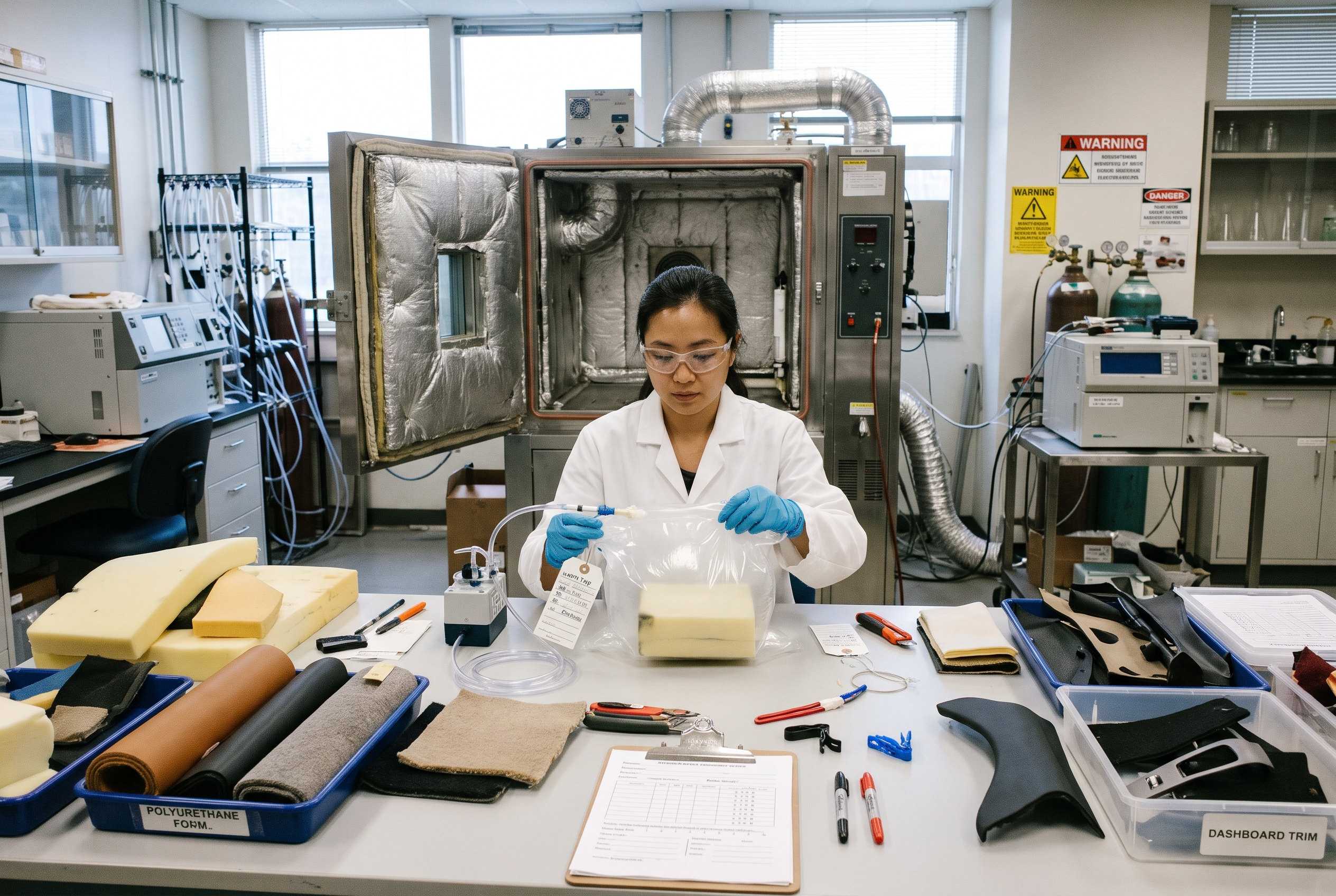
The distinctive scent associated with a brand new vehicle actually stems from a complex mixture of airborne chemicals evaporating slowly from seat cushions, synthetic leather upholstery, floor carpets, and trim adhesives. While mild material aromas fade gradually over time, excessive chemical off gassing creates unpleasant cabin odors, triggers occupant headaches, and leaves hazy residues across interior glass surfaces. A VOC test is a quantitative analytical laboratory evaluation used to measure volatile organic compounds emitted from interior trim materials under controlled thermal conditions. By pairing instrumental chemical screening with sensory odor assessment, automotive engineers eliminate offensive vapor sources before interior assemblies reach showroom floors.
Interior odor and chemical safety are closely connected, yet human noses alone cannot identify hazardous colorless gases. Objective laboratory analysis isolates exact chemical compounds responsible for pungent smells and confirms that passenger cabin air remains safe during prolonged daily commuting.
Primary Interior Materials Driving Cabin Chemical Vapors
Several core interior material groups contribute the highest share of volatile emissions inside enclosed passenger compartments.
- Polyurethane Seat Cushions and Acoustic Foams: Flexible foam buns rely on chemical blowing agents, amine catalysts, and flame retardants during molding. If curing ratios drift outside strict manufacturing tolerances, residual amines and lightweight aldehydes diffuse continuously through fabric covers whenever sunlight warms the seats.
- Synthetic Leather, Vinyl Skins, and Carpeting: Coated textiles, instrument panel skins, and tufted floor mats incorporate plasticizers, surface lacquers, and latex backing binders. Elevated cabin heat mobilizes semi volatile hydrocarbon vapors from these broad surface areas, contributing directly to both persistent plastic odors and oily windshield fogging.
- Trim Laminating Adhesives and Sound Deadening Pads: Waterborne and solvent based bonding glues hold headliners, door inserts, and trunk liners firmly in place. Incomplete factory drying or improper adhesive formulation leaves trapped esters, ketones, and unreacted monomers that evaporate steadily into recirculated cabin air.
Mobility Sectors Relying on Cabin Odor and Chemical Screening
Validating interior foam chemistry and trim vapor output safeguards passenger comfort and brand reputation across diverse automotive markets.
- Tropical Market Passenger Vehicles: Cars parked outdoors across warm equatorial regions experience intense cabin heat soak, causing dark dashboards and upholstered seats to release trapped chemical vapors at significantly higher rates than in temperate climates.
- Luxury Sedans and Executive Sport Utility Vehicles: Premium automakers enforce exceptionally strict olfactory and emission specifications to guarantee a refined, neutral interior environment free from harsh chemical notes.
- Commercial Vans, Ride Hailing Fleets, and Coaches: Professional drivers spend long daily shifts inside closed cabins with recycled air conditioning. Low emission interior components reduce eye irritation, respiratory discomfort, and driver fatigue across continuous shift schedules.
- Tier One Interior Module Integrators: Seat assembly plants and cockpit module producers routinely screen incoming foam blocks, textile rolls, and adhesive drums to stop contaminated raw material lots before final stitching and lamination.
Eliminating harsh cabin odors and invisible chemical hazards requires accurate empirical data throughout interior material development. By scheduling a certified voc test through Alstesting Voc testing services in Malaysia, regional trim suppliers and vehicle assemblers gain dependable, third party analytical insights to deliver cleaner, healthier vehicle cabins across Southeast Asia.
Frequently Asked Questions (FAQ)
Why can a vehicle interior smell strongly even when total volatile emissions appear low?
Human olfactory receptors are extraordinarily sensitive to certain sulfur compounds, tertiary amines, and specific aldehydes even at tiny trace concentrations. A material may register a very low overall chemical output yet still fail an odor evaluation if a single pungent, odor active molecule is present above its human detection threshold.
How do amine catalysts in polyurethane seat foam contribute to cabin air issues?
Traditional nonreactive amine catalysts help accelerate polyurethane foam expansion during molding, but they do not chemically bond into the finished polymer structure. Over time, these unbound amine molecules migrate to the foam surface, generating a noticeable fishy smell and staining adjacent vinyl or polycarbonate trim components.
Does parking a car in direct tropical sunlight change laboratory testing temperatures?
Yes, interior cabin surfaces under intense tropical sunlight frequently exceed sixty five degrees Celsius even when outdoor air temperatures feel moderate. Accredited laboratory test methods intentionally elevate chamber and thermal desorption temperatures to replicate these harsh solar heat soak conditions and expose worst case chemical evaporation behavior.